
 Australia
 Cayman Islands
 Dominican Republic
 Hong Kong
 India
India
 Indonesia
 Ireland
 Jamaica
 New Zealand
 Singapore
 Thailand
 United Kingdom
 United States
 Vietnam

Apparel Imports | Fashion Freight Forwarding
Clothing Imports to the USA: Freight, Customs and Logistics Trends for 2026Explore how sourcing changes, freight costs, customs compliance, inventory pressure, and faster fashion cycles are reshaping clothing imports to the USA.
Fashion may be defined by changing styles, but behind every collection is a carefully coordinated supply chain.
Clothing must move from manufacturers to ports, airports, distribution centres, stores, and online customers before consumer interest changes. For apparel importers, a late shipment is not simply delayed cargo. It can mean missed seasonal sales, markdowns, excess inventory, or empty shelves.
The United States remains one of the world’s most important markets for garments and textiles. Recent U.S. International Trade Commission data placed combined textile and apparel imports at approximately $121.4 billion in 2024.
At the same time, fashion businesses are managing changing sourcing patterns, tariff exposure, freight-rate volatility, compliance requirements, and shorter retail cycles. This makes experienced freight forwarding increasingly important for brands, wholesalers, distributors, and clothing importers.
The scale of the U.S. apparel market creates significant opportunities for importers, but it also creates intense competition.
Official U.S. trade data shows that textiles and apparel continue to represent a major import category. The U.S. International Trade Commission reported approximately $121.4 billion in textile and apparel imports during 2024.
The Office of Textiles and Apparel also reported that U.S. apparel import volume during the first half of 2025 increased compared with the same period in 2024. Import volume does not always move in the same direction as import value, but it confirms that large quantities of clothing continue to move through U.S. supply chains.
Importers can review current statistics through the official OTEXA apparel import database.
This continued import activity creates demand for international transportation, customs clearance, warehousing, consolidation, and inland distribution. GFFCA provides a range of freight and logistics services to help businesses manage these connected stages.
Where Does the USA Import Most of Its Clothing From?China and Vietnam remain two of the largest apparel suppliers to the U.S. market. According to a U.S. International Trade Commission study, the two countries together accounted for approximately 39% of U.S. apparel imports by value during the period reviewed.
However, apparel sourcing is no longer concentrated around only one or two countries. Importers are increasingly comparing suppliers across Asia, South Asia, and the Western Hemisphere.
ChinaChina remains an important source for garments, fabrics, accessories, packaging, and large-scale manufacturing. Its established supplier networks and production capabilities can support a wide range of clothing categories.
Importers must still evaluate tariff exposure, manufacturing lead time, minimum order quantities, and routing options before relying on one sourcing market.
VietnamVietnam has developed into a major apparel production centre, particularly for sportswear, outerwear, footwear-related products, and branded fashion.
It is often considered by importers looking for established manufacturing capability and an alternative to China-based production.
BangladeshBangladesh continues to play an important role in high-volume garment production. It is particularly associated with cotton apparel, knitwear, basic garments, denim, and large retail orders.
Competitive production pricing can be attractive, but importers must also consider longer transit times, supplier compliance, factory capacity, and seasonal booking pressure.
IndiaIndia offers a broad textile base and is known for cotton products, specialty fabrics, embroidery, home textiles, fashion garments, and smaller-batch production options.
Businesses sourcing from India need to match the origin port, shipment size, and required delivery date with the right ocean or air freight service.
Indonesia, Cambodia and PakistanIndonesia, Cambodia, and Pakistan also remain important sourcing markets. Their roles differ depending on product type, fabric availability, production cost, trade conditions, and factory capabilities.
Rather than selecting a supplier based only on unit cost, importers should compare the complete landed cost, including freight, duty, customs, handling, storage, and inland transportation.
Businesses comparing supplier markets and shipping routes can work with Golden Freight Forwarding to review transportation options before purchase orders are finalized.
Why U.S. Apparel Sourcing Strategies Are ChangingApparel companies are changing sourcing strategies because fashion supply chains are being pulled in several directions at once.
Consumers want lower prices, more product choices, faster releases, responsible production, and reliable availability. At the same time, importers must protect margins and avoid carrying too much inventory.
Tariffs and Total Landed CostThe lowest factory price does not always create the lowest landed cost.
Import duties, tariffs, freight rates, origin charges, customs fees, storage, demurrage, container examination, and final delivery can significantly change the true cost of imported clothing.
Importers should calculate projected landed cost before confirming large orders. GFFCA’s free shipping audit can help businesses identify possible freight inefficiencies and unnecessary logistics expenses.
Speed to MarketFashion demand can change quickly. A style that is popular today may lose momentum before a long production and shipping cycle is complete.
This encourages importers to use smaller, more frequent shipments and maintain the flexibility to switch between ocean and air freight.
Brands launching urgent collections, replacement stock, or high-demand products may use GFFCA’s air freight services when a missed delivery window would cost more than the higher transportation rate.
Supplier DiversificationRelying on one supplier, one port, or one country can expose an importer to production interruptions, congestion, policy changes, and capacity shortages.
Diversification can mean sourcing different products from different countries, using alternative ports, or keeping both ocean and air freight options available.
Nearshoring and Regional SourcingSome clothing businesses are exploring production in Mexico, Central America, and the Caribbean to shorten replenishment cycles and reduce dependence on long trans-Pacific routes.
The CAFTA-DR agreement can create trade opportunities with Costa Rica, the Dominican Republic, El Salvador, Guatemala, Honduras, and Nicaragua. However, preferential treatment depends on applicable origin rules and documentation.
Importers should not assume that every garment manufactured in a free-trade partner country automatically qualifies for reduced duty. Official CAFTA-DR rules of origin should be reviewed before making a duty claim.
Choosing the Right Shipping Method for Clothing ImportsThere is no single best way to import clothing into the USA. The right option depends on shipment volume, product value, delivery deadline, supplier location, and inventory strategy.
FCL Shipping for Larger Apparel OrdersFull container load shipping is often suitable for established importers, seasonal collections, retail programmes, and large purchase orders.
With FCL, one shipper uses the container. This provides more control over loading, cargo separation, and container utilization.
FCL may be appropriate when:
The order can fill most or all of a container.The clothing has a fixed seasonal launch date.The importer wants fewer cargo-handling points.Carton quantities are high enough to make container shipping economical.The business has warehouse space available at destination.Businesses comparing full-container options can review GFFCA’s FCL shipping support for container planning and international freight coordination.
LCL Shipping for Smaller or Frequent OrdersLess-than-container-load shipping allows an importer to pay for part of a shared container rather than booking the entire unit.
LCL may be useful for:
Smaller clothing brands.Sample collections and new product testing.Lower-volume purchase orders.More frequent inventory replenishment.Importers without space to receive a complete container.LCL can reduce the need to wait until enough clothing is ready to fill a container. However, importers should consider consolidation, deconsolidation, warehouse handling, and destination charges.
GFFCA’s LCL shipping services can help businesses coordinate smaller international shipments and consolidated freight.
Air Freight for Fast Fashion and Urgent ReplenishmentAir freight costs more than standard ocean transportation, but it can protect revenue when time is critical.
It is commonly considered for:
Samples and pre-production garments.Influencer, media, or launch collections.Urgent stock replenishment.High-value designer apparel.Small quantities of fast-selling products.Orders delayed during manufacturing.Some importers also use a split-shipment strategy. A smaller quantity moves by air to support the launch, while the remaining order moves by ocean at a lower cost.
FCL works best for larger, planned volumes that justify a full container.
LCL is more suitable for smaller orders, product testing, or frequent replenishment.
Air freight is the better option when protecting the sales window matters more than securing the lowest rate.
The best port is not always the port closest to the final customer. Importers should compare the complete route from the supplier to the warehouse.
The Port of Los Angeles lists apparel among its leading containerized import categories and handles significant trade with Northeast and Southeast Asia.
West Coast gateways may work well for clothing originating in China, Vietnam, Cambodia, Indonesia, and other Asian markets. East Coast gateways may offer advantages for cargo moving from India, Bangladesh, Europe, the Middle East, or through the Suez Canal.
Port selection should consider:
Origin country and sailing frequency.Ocean transit time.Port congestion and terminal reliability.Customs-clearance requirements.Distance to the final distribution centre.Rail, drayage, and trucking availability.Total landed cost rather than ocean rate alone.Canadian-based brands coordinating North American apparel programmes can also work with GFFCA’s Vancouver freight forwarders or Toronto freight forwarders for international coordination and onward distribution.
Customs Requirements for Clothing Imports to the USAApparel customs compliance can be more detailed than many new importers expect.
Garments can be classified differently based on material, construction, gender category, garment type, and whether the product is knitted, crocheted, or woven.
In general, knitted or crocheted garments commonly fall under Chapter 61 of the Harmonized Tariff Schedule, while many woven garments fall under Chapter 62. The exact classification must still be determined from the product details.
Importers can review current tariff classifications through the official U.S. Harmonized Tariff Schedule.
Important Apparel Import DocumentsCommercial invoice.Packing list.Bill of lading or air waybill.Detailed garment descriptions.HTS classification.Country-of-origin information.Manufacturer and supplier details.Applicable trade-agreement documentation.Insurance documents when required.Vague descriptions such as “clothes,” “fashion products,” or “garments” may not provide enough information for classification.
A stronger description may identify the item, material, construction, intended wearer, and quantity—for example, “women’s knitted cotton T-shirts” or “men’s woven polyester jackets.”
GFFCA’s U.S. customs brokerage support can help importers prepare entry information and coordinate clearance before cargo arrives.
Businesses handling shipments across multiple markets can also review GFFCA’s broader customs brokerage services.
Clothing Labelling and Country-of-Origin RequirementsShipping the garments is only part of the compliance process. Clothing must also meet applicable U.S. labelling requirements before being sold.
The Federal Trade Commission explains that most textile and wool products require labels showing:
Fiber content.Country of origin.The manufacturer or another responsible business.Care instructions where applicable.Importers should review the FTC’s official textile and apparel labelling guidance before production is completed.
Correcting labels after goods arrive can create extra handling, warehouse labour, storage, and delivery delays.
U.S. Customs and Border Protection also requires foreign-origin goods to be marked with the English name of the country of origin unless an exception applies. Importers should review the official CBP country-of-origin marking guidance.
When garments need labelling, sorting, repacking, or other special coordination, GFFCA’s value-added logistics services can be included in the overall shipment plan where applicable.
Hidden Costs That Can Reduce Apparel Import MarginsApparel may be relatively lightweight, but clothing shipments can still generate significant logistics costs.
The following expenses should be reviewed before confirming a purchase order:
Origin pickup and factory handling.Export documentation.Ocean or air freight.Fuel and carrier surcharges.Customs duty and tariff exposure.Customs brokerage.Examination and inspection charges.Terminal and port charges.Demurrage, detention, and storage.Deconsolidation for LCL cargo.Drayage and inland delivery.Warehouse receiving and palletization.Labelling, sorting, or repacking.A low ocean rate may not be the lowest overall option if it creates higher destination, storage, or inland transportation costs.
Importers should request a quote that clearly identifies what is included, what is excluded, and which charges may change after arrival.
Warehousing and Distribution for Fashion ImportsThe apparel supply chain does not end when a container reaches the port.
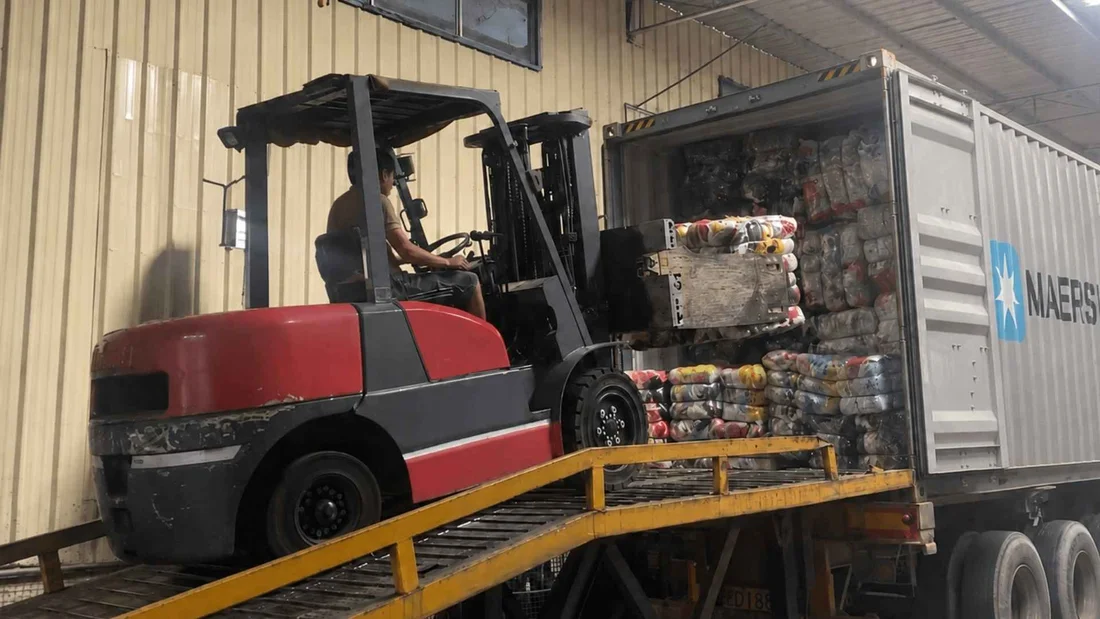
Garments may still need to be received, counted, sorted, palletized, stored, labelled, transferred, or distributed to stores and fulfilment centres.
GFFCA’s warehousing and distribution services can help businesses position inventory closer to customers and prepare products for onward movement.
Warehousing is particularly valuable when:
Seasonal goods arrive before the retail launch.A container contains inventory for multiple locations.Products require sorting or palletization.Retailers have limited receiving windows.The importer wants to release stock gradually.Online and wholesale orders share the same inventory.After the cargo is released, GFFCA’s inland transportation solutions can help connect ports, airports, warehouses, distribution centres, and final delivery locations.
Importing Used Clothing and Resale ApparelUsed clothing has different handling and market considerations from new retail apparel.
Exporters and importers may need to consider grading, baling, packing, destination restrictions, fumigation requirements, commodity descriptions, and local import rules.
GFFCA supports businesses involved in used clothing exports, including international transportation and freight coordination.
Businesses operating from Ontario can also review GFFCA’s used clothing export services in Toronto.
Apparel Import Checklist for U.S. BusinessesBefore clothing leaves the supplier, importers should confirm the following:
Product and Supplier DetailsConfirm garment type, fabric composition, construction, and intended wearer.Verify the manufacturing country and supplier details.Confirm carton quantities, carton dimensions, and total weight.Inspect labels before mass production.Request product samples when necessary.Customs PreparationConfirm the correct HTS classification.Estimate duty and tariff exposure.Review country-of-origin requirements.Prepare a detailed commercial invoice and packing list.Confirm whether a trade agreement may apply.Share documents with the customs broker before arrival.Freight PlanningCompare FCL, LCL, and air freight.Confirm cargo-ready date and required delivery date.Build extra time into seasonal launches.Review alternative ports and routes.Confirm insurance requirements.Plan inland delivery and warehouse receiving.Inventory PlanningSeparate launch inventory from replenishment inventory.Identify which items may need urgent air freight.Confirm warehouse capacity before arrival.Prepare for labelling, repacking, or distribution requirements.Avoid importing more seasonal stock than the market can absorb.Frequently Asked Questions About Clothing Imports to the USAWhat is the best way to ship clothing to the USA?FCL is generally suitable for larger orders, LCL for smaller or more frequent shipments, and air freight for urgent or high-value clothing. The best method depends on shipment volume, deadline, origin, and total landed cost.
What documents are needed to import apparel into the USA?Common documents include a commercial invoice, packing list, bill of lading or air waybill, detailed product descriptions, country-of-origin information, and applicable trade-agreement documents.
How are clothing imports classified for customs?Classification depends on garment type, fabric, construction, intended wearer, and whether the clothing is knitted, crocheted, or woven. Many knitted garments fall under HTS Chapter 61, while many woven garments fall under Chapter 62.
Does imported clothing need a country-of-origin label?Most foreign-origin garments must be marked with the country of origin. Apparel may also require fibre-content, manufacturer or marketer identity, and care information under applicable U.S. rules.
How can apparel importers reduce freight costs?Importers can reduce costs by consolidating orders, choosing the correct shipping mode, providing accurate cargo details, booking early, preventing customs-document errors, avoiding port storage, and planning warehouse delivery before arrival.
Can GFFCA handle apparel shipments from multiple countries?GFFCA can coordinate international freight, customs support, inland transportation, warehousing, and distribution based on the shipment origin, volume, and final destination.
Final ThoughtsClothing imports to the USA are being shaped by faster fashion cycles, supplier diversification, cost pressure, customs requirements, and the need for better inventory control.
The strongest apparel supply chains do not depend on one supplier, one route, or one shipping method. They combine planned ocean freight with flexible air freight, accurate customs preparation, strategically located inventory, and dependable inland distribution.
For importers, the goal is not simply to move garments at the lowest freight rate. The goal is to place the correct inventory in the market while the customer still wants it.
GFFCA helps clothing brands, wholesalers, distributors, and importers coordinate international freight from the supplier to the final delivery point.
Get support with clothing imports, ocean freight, air freight, customs brokerage, warehousing, and inland distribution.
Request an Apparel Freight Quote