Heavy Machinery Shipping for Construction Equipment: Key Challenges and Solutions
By Golden Freight Forwarding
· 04/17/2026
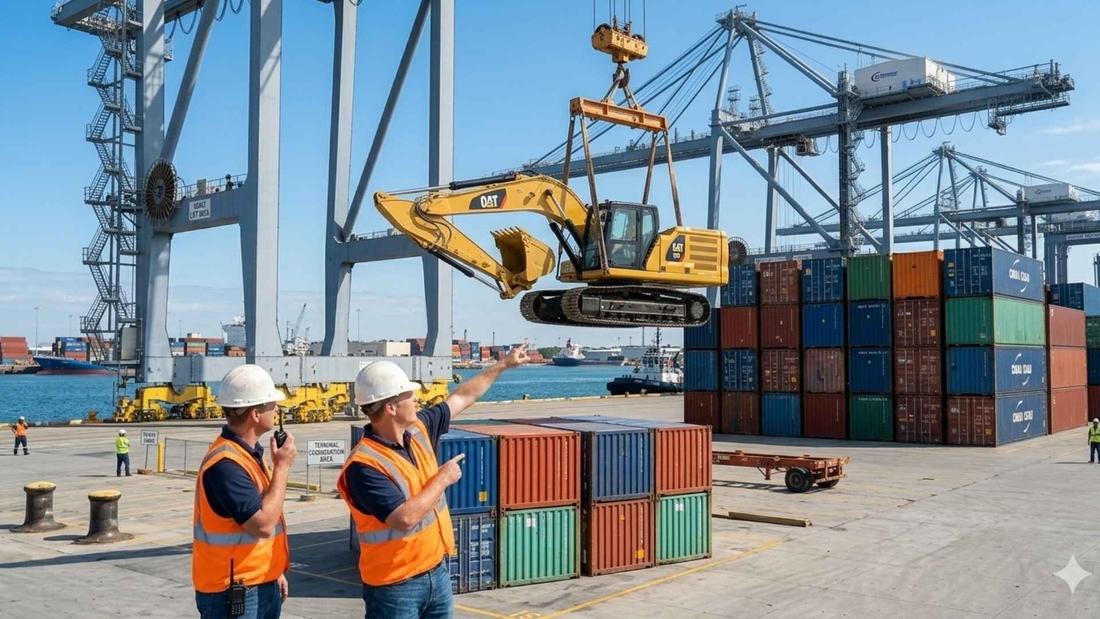
Shipping construction equipment looks simple until one delay pushes back an entire project. When oversized machinery is involved, even a small planning mistake can lead to permit issues, storage costs, damaged equipment, and expensive downtime. In 2026, construction equipment doesn't move like standard cargo. Excavators, loaders, cranes, and bulldozers require specialized handling, route planning, and coordination across ports, carriers, and inland transport that most shippers underestimate. Why Construction Equipment Shipping Is Different A dozer isn't a pallet. A crane isn't a container. Heavy Machinery Shipping for construction equipment involves challenges that standard freight never encounters: Oversized dimensions - Often exceeding trailer or container limits Uneven weight distribution - Requires specialized securing and balance Delicate hydraulic systems - Despite rugged appearance, internal components are fragile Project-critical deadlines - A missed delivery window affects labor, site readiness, rental schedules Irregular shapes - Attachments, booms, counterweights create loading complexity The reality? A delayed excavator doesn't just cost freight charges. It costs crew downtime, schedule slippage, and contract penalties. Most Common Construction Equipment We Ship Each type requires a different approach based on size, weight, attachments, and destination: Equipment TypeTypical Weight RangeCommon Shipping ChallengeExcavators10-90 tonsBoom/arm removal, counterweight balanceBulldozers15-100+ tonsTrack width, blade positioningWheel Loaders12-50 tonsBucket attachment, center of gravityCranes (Mobile)20-120+ tonsBoom disassembly, counterweight separationGraders15-35 tonsBlade width, overall lengthCompactors/Rollers8-25 tonsDrum width, vibration system protection For businesses handling Heavy Machinery Shipping, understanding each equipment type's unique requirements is critical to avoiding costly mistakes. 6 Challenges That Catch Shippers Off Guard1. Oversized & Overweight Dimensions The problem: Equipment exceeds standard trailer or container limits, requiring special permits that can take weeks to secure. Bridge weight limits along routes Road width restrictions in urban areas Time-of-day transport rules (often night/weekend only) Escort vehicle requirements adding $500-2,000+ per shipment 2. Loading & Securing Complexity The problem: Not all equipment can be rolled on/off easily. Improper securing damages $100K+ machinery during transit. Hydraulic systems vulnerable to shock and tilt Attachments may need separate crating Lashing points must distribute load correctly Crane operators need equipment-specific training 3. Port & Terminal Handling Delays The problem: Heavy machinery requires specialized cranes, RoRo ramps, or breakbulk handling—not always available on demand. Crane availability at destination port (can delay 5-10 days) Terminal storage charges accumulating at $150-500/day Port congestion pushing equipment to overflow yards Coordination gaps between ocean carrier and inland transport 4. Permit & Route Restrictions The problem: What seems like a straightforward route on a map may have bridge limits, tunnel clearances, or seasonal weight restrictions. Restriction TypeCommon ImpactLead Time NeededBridge Weight LimitsForces 50-200 mile detours2-4 weeks for permitHeight RestrictionsRequires boom/cab removal1-2 weeks engineeringSeasonal Road BansSpring thaw weight restrictionsDelays 6-12 weeksUrban Transit WindowsNight/weekend only movement1-3 weeks coordination5. Customs & Documentation Gaps The problem: Construction equipment requires detailed documentation including serial numbers, condition reports, and valuation—mistakes cause customs holds. Engine serial numbers must match export paperwork Used equipment valuation disputes add 7-14 day delays Missing import brokerage services canada compliance causes border rejections Certificate of origin requirements vary by destination market Companies offering comprehensive value-added services handle documentation proactively, preventing these costly holds. 6. Job Site Delivery Complications The problem: Equipment reaches destination city, but final-mile delivery to active construction sites requires terrain access, unloading equipment, and site coordination. Rough terrain access roads not suitable for standard trailers No crane or forklift available on site for unloading Site manager unreachable during delivery window Weather conditions (mud, snow) making delivery impossible The Hidden Costs That Destroy Budgets The freight rate is just the beginning. Here's where the real costs hide: Hidden CostTypical RangeWhen It HitsPermit Fees$500-5,000Before transport can beginEscort Vehicles$500-2,000/dayRequired for oversized loadsCrane & Rigging$1,500-8,000/liftLoading/unloading at portTerminal Storage$150-500/dayWhen arrival/departure misalignDemurrage/Detention$100-300/dayContainer/chassis held too longRoute Survey$1,000-3,000Complex/unfamiliar routesProject Delay Costs$5,000-50,000+Late equipment arrival impacts Critical insight: The biggest cost in Heavy Machinery Shipping is often not the linehaul itself. It's the cost of poor planning. Shipping Methods: Choosing the Right Approach Not all construction equipment ships the same way. The right method depends on machine type, dimensions, destination, urgency, and budget. RoRo (Roll-on/Roll-off) Shipping Best for: Self-propelled equipment that can be driven on/off the vessel. ? Excavators, loaders, dozers with functional drive systems ? Faster loading/unloading than breakbulk ? Lower handling costs (no crane required) ? Limited to equipment under height/weight vessel limits Breakbulk Shipping Best for: Oversized equipment that doesn't fit in containers. ? Large cranes, graders, specialty machinery ? Flexible for irregular shapes ? Can handle extreme weights (100+ tons) ? Requires specialized crane handling at ports ? Longer port dwell time Flat Rack / Open-Top Containers Best for: Equipment or detached parts when dimensions allow. ? Compact loaders, skid steers, attachments ? Standard container infrastructure ? Better weather protection than breakbulk ? Limited by container dimensions (40' max length typically) Specialized Inland Heavy Haul Best for: Domestic or final-mile delivery of oversized loads. ? Lowbed trailers, step decks, multi-axle configurations ? Handles extreme weight distribution ? Can navigate route restrictions with proper permits ? Requires permit coordination and route surveys For complex moves requiring warehousing and distribution support, staging equipment before final delivery reduces site congestion and timing risks. Real-World Scenarios: What Goes Wrong Scenario 1: The Permit Delay Situation: A contractor purchases a 45-ton bulldozer for a highway project starting in 3 weeks. The dozer arrives at port but can't move inland because route permits weren't secured in advance. Impact: 17 days of terminal storage charges ($4,250), project start delayed, crew sitting idle at $8,000/week labor cost. Lesson: Permit planning must begin before equipment leaves origin, not after arrival. Scenario 2: The Port Storage Trap Situation: An excavator reaches destination port 5 days before the vessel window. Terminal storage wasn't budgeted. Impact: 12 days of storage at $350/day ($4,200) plus crane delays when ready to move, adding another $2,800. Lesson: Cross-docking and warehousing services prevent expensive port storage by staging equipment in controlled facilities. Scenario 3: The Job Site Access Failure Situation: A wheel loader arrives at remote construction site, but access road is mud after heavy rain. Standard delivery trailer can't navigate terrain. Impact: Equipment sits on trailer ($200/day detention), project delayed 6 days waiting for ground to dry, eventual specialized off-road delivery adds $3,500. Lesson: Site delivery planning must include terrain assessment, weather contingencies, and unloading equipment confirmation. How the Right Partner Solves These Problems A strong Heavy Machinery Shipping partner doesn't just move equipment. They reduce project risk through: 1. Route & Permit Planning Identify restrictions and secure approvals before equipment moves Conduct route surveys for complex or unfamiliar corridors Coordinate with state/provincial authorities on timing and escorts 2. Mode Selection Expertise Choose optimal combination of RoRo, breakbulk, container, or inland transport Balance cost vs. timeline vs. handling requirements Leverage carrier relationships for capacity and pricing 3. Loading & Securing Specialists Coordinate safe loading with equipment-specific lashing plans Provide protective measures for hydraulic systems and electronics Manage attachment separation and crating when needed 4. Port & Customs Coordination Manage terminal timing to minimize storage charges Handle documentation for seamless customs clearance Provide Import / Export Solutions for cross-border compliance Coordinate crane availability and breakbulk handling 5. Project-Level Scheduling Align delivery with site readiness and deadline requirements Build contingency plans for weather, permits, or access delays Communicate proactively on status and potential issues Bottom line: For construction companies, shipping isn't just about transport. It's about keeping the project moving. Pre-Shipment Checklist: Get This Right Before any construction equipment moves, confirm: CheckpointStatusExact dimensions and weight confirmed (not estimated)?Machine condition documented with photos?Loose parts or attachments identified for separate handling?Shipping method selected based on equipment type?Permits reviewed and applications submitted?Customs paperwork prepared (serial numbers, valuation, origin)?Delivery site access confirmed (terrain, gates, clearances)?Unloading equipment arranged (crane, forklift, ramps)?Insurance arranged for full replacement value?Timeline aligned with project schedule milestones? Miss even one checkpoint, and you're gambling with project timelines and budgets. Why Experience Matters in Heavy Machinery Shipping Shipping construction equipment isn't a commodity service. It requires: Equipment knowledge: Understanding how excavators, cranes, and loaders behave during transport Route intelligence: Knowing which corridors have restrictions before permits are filed Port relationships: Securing crane time and terminal slots when capacity is tight Customs expertise: Navigating valuation disputes and classification codes Project thinking: Aligning logistics with construction deadlines, not just freight schedules The right provider helps with fewer delays, better planning, safer handling, lower hidden costs, and improved project reliability. Partner with Heavy Machinery Specialists At GFFCA, we've spent decades moving construction equipment across North America and globally. From excavators to cranes, we help businesses move heavy machinery with smarter planning and fewer surprises. Our approach includes: Permit planning and route surveys before equipment moves RoRo, breakbulk, and specialized inland transport coordination Port handling and customs clearance for seamless cross-border moves Project-level scheduling aligned with your site readiness Comprehensive value-added services for end-to-end support Don't let equipment delays derail your next project. Request a quote today and work with a team that understands construction equipment, route planning, permits, and project-critical delivery. Because in construction, time is money—and the right shipping partner protects both.
About This Author

Golden Freight Forwarding
Mississauga, Ontario, Canada
Golden Freight Forwarding (Golden Freight) is a trusted Canadian freight forwarder delivering end-to-end logistics and supply chain solutions for businesses engaged in global trade. Headquartered in Mississauga, Ontario, we specialize in reliable, cost-effective, and scalable freight forwarding, int…
More Articles From This Author
Safe Equipment Move: Top Tips & Strategies
2026-07-13Heavy Equipment Moving | Machinery Relocation Essential Tips for Safe Equipment Moves A safe equipment move is not about rushing heavy machinery from one place to another. It is about planning, lifting, securing, transporting, and placing t… Read More »
 Australia
 Cayman Islands
 Dominican Republic
 Hong Kong
 India
India
 Indonesia
 Ireland
 Jamaica
 New Zealand
 Singapore
 Thailand
 United Kingdom
 United States
 Vietnam

 Canada Business Directory